- Northern Theatre News
- Pages
- Jamie Sophia Fletcher Q&A - Macbeth
Q & A WITH JAMIE SOPHIA FLETCHER
Director of Storyhouse Originals production of Shakespeare’s MACBETH
Macbeth plays at Storyhouse from 6-21 March 2026
Jamie Sophia Fletcher is the new Associate Artistic Director at Leeds Playhouse. She is a director and musician specialising in musical theatre and new writing, with a passion for re-envisioning productions and reframing classic stories for contemporary audiences. Jamie brings a fiercely distinctive voice shaped by her experience as a northern, working-class, neurodivergent, queer, trans woman. Her work champions creativity, accessibility and fearless collaboration. | 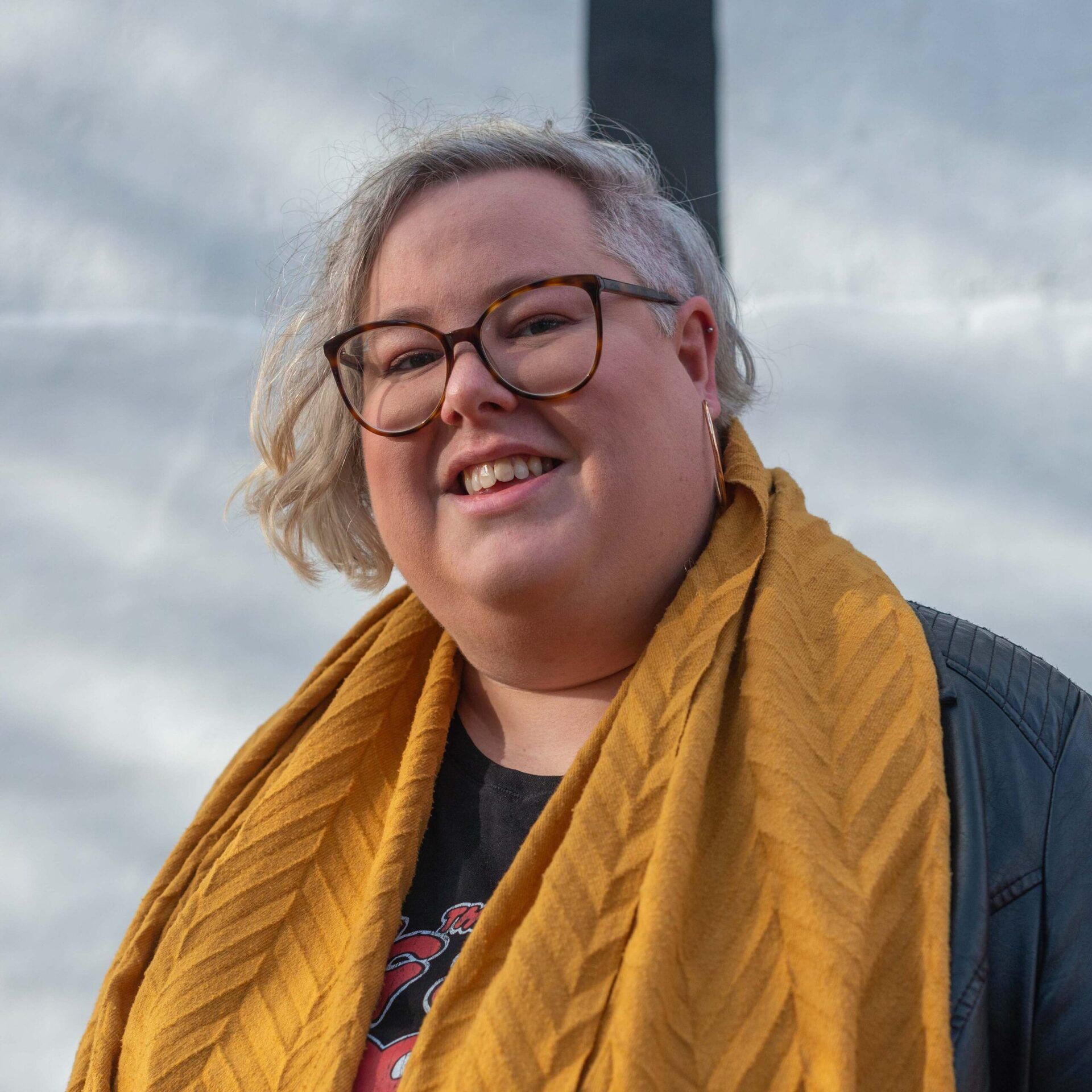 |
She has worked with leading creatives, producers and partners across a wide range of genres, styles and scales. This includes directing the critically acclaimed UK revival of the musical Hedwig and the Angry Inch by John Cameron Mitchell & Stephen Trask (produced by Leeds Playhouse & HOME) and the Fringe First Award-winning play Happy Meal by Tabby Lamb (produced by Theatre Royal Plymouth & Roots).
What attracted you to/appealed about the idea of directing Macbeth at Storyhouse?
When I was pitching ideas to the producers at Storyhouse, they really responded to my passion for re-envisioning classic stories and reframing them for contemporary audiences. Storyhouse feels like a place that actively invites that kind of conversation, a space that wants theatre to feel alive, relevant and open to everyone, not intimidating or exclusive.
Like a lot of people, I grew up feeling that Shakespeare probably wasn’t for someone like me. The language can feel difficult and overly academic. Sometimes there’s a stereotypical idea of how Shakespeare is performed which can be off-putting.
I remember in the 90’s seeing Baz Luhrmann’s Romeo & Juliet at school and feeling genuinely excited by it; it helped me understand the story emotionally and viscerally and showed me that Shakespeare could feel modern and accessible. Even so, I still carried the sense that Shakespeare wasn’t really “for me”, perhaps because of how it’s traditionally taught.
Macbeth, however, always stood out. It’s a story full of witches, murder, ghosts and that is thrilling to me. It’s also about ambition, power and the stories we tell ourselves to justify our actions, which feels incredibly relevant today.
Directing Macbeth at Storyhouse felt like an opportunity to strip away the barriers people often feel around Shakespeare and lean into what makes this play so gripping: its atmosphere, its danger and its humanity - presented in a way that invites new audiences in rather than keeping them at arm’s length.
Can you tell us a bit about your creative practice? And how have you approached adapting such a well-known work?
Whether I’m directing a play or a musical my approach always starts by asking the same question: why tell this story now? I want the show to feel fresh, entertaining and accessible to a wide audience. I’m always interested in removing barriers, especially for people who might feel that certain shows, like Shakespeare, aren’t “for them”.
With Macbeth, that question felt particularly important. There have been countless productions of the play, so the challenge was how to make this version feel distinctive while staying true to Shakespeare’s language and intentions. I wanted to create a version that would have excited my younger self: bold, fast-paced and visually striking. That led me towards a kind of teen-horror-inspired Macbeth, dark and dangerous, but also playful and funny. Horror and comedy work hand in hand; both rely on tension and release, and together they create something electric especially when witnessed by a live audience. I was also keen to draw out themes that feel especially relevant now: identity, masculinity, manipulative power and cycles of violence. Shakespeare loved horror, and Macbeth invites us to lean into that while still grappling with big psychological and political ideas.
The adaptation process was about being bold but precise. I made decisive cuts to sharpen the pace and keep the story moving, then refined the text line by line to ensure clarity and momentum. I was also thinking practically about staging — actors playing multiple roles, the rhythm of scenes, and how moments could be heightened to support the overall artistic vision. Hearing the text aloud was also vital. This allowed the script to be tested, adjusted and energised. Through that balance of bold cutting and careful refinement, the aim has always been to honour the original play while presenting a Macbeth that feels urgent, accessible and exhilarating for a contemporary audience.
Macbeth will be presented on the Storyhouse ‘thrust’ stage – has that informed your approach as director, and if so, how?
Absolutely. The thrust stage places the audience on three sides, immediately creating a sense of closeness and shared space. It encourages a playful approach to staging and design, particularly in how we use intimacy and scale. There’s nowhere for the characters to hide. Their choices, fears and ambitions are constantly exposed, and the audience becomes almost complicit in witnessing those decisions unfold. The thrust naturally generates momentum, immediacy and connection, which suits Macbethperfectly, heightening the tension, the violence and the moral unease, and making the story feel urgent and exciting for audiences.
What can audiences coming to see your Macbeth expect?
I don’t want to give much away. I think it will feel like a bold, unexpected and exciting version, especially for people who might think they don’t like or can’t understand Shakespeare.
This is still the classic story of Macbeth, using Shakespeare’s language, but it’s presented in a way where the audience can really connect with the characters and the stakes. It’s visceral, unsettling at times, and even sometimes humorous. It’s a version of Macbeth that feels relevant to now, rather than something distant or academic.
School is often people’s introduction to Shakespeare – he’s on the curriculum and how he’s taught can be crucial. Why do you think, more than 400 years after his death, that Shakespeare and his work remain so relevant?
Shakespeare’s plays offer distinct insights into human behaviour. His plays are about power, love, ambition, fear and identity. These are universal themes that still shape our lives and the world around us. Even though the language isn’t how we speak now, the emotional truths are completely recognisable, and each generation finds its own reflection in the stories.
More generally, what is your earliest memory of theatre? And is there a particular play, performance or figure that has had a decisive impact on your own outlook or career?
I was about ten years old when I saw a professional theatre production for the first time. My mum took me to see The Phantom of the Opera at The Palace Theatre in Manchester. I don’t think she had ever seen it live herself, but she had played a cast recording on cassette at home for years.
I remember getting dressed up, the excitement of the occasion, and also feeling slightly out of place in this opulent theatre building. I vividly remember the thrill of the orchestra warming up as we took our seats, and then being completely blown away by the spectacle and magic of witnessing live theatre. It was a defining moment for me. I remember thinking very clearly, I want to do that someday.
That experience has stayed with me and continues to shape how I make theatre, particularly in how I think about the audience experience.
What one piece of advice would you give to someone just starting out as a director?
Be tenacious in pursuing your dreams. There will inevitably be obstacles and many rejections along the way, but perseverance really matters. At the same time, don’t ever be afraid to be yourself — your individuality and perspective are your greatest strengths, and ultimately what will set your work apart.